Assessment |
Biopsychology |
Comparative |
Cognitive |
Developmental |
Language |
Individual differences |
Personality |
Philosophy |
Social |
Methods |
Statistics |
Clinical |
Educational |
Industrial |
Professional items |
World psychology |
Biological: Behavioural genetics · Evolutionary psychology · Neuroanatomy · Neurochemistry · Neuroendocrinology · Neuroscience · Psychoneuroimmunology · Physiological Psychology · Psychopharmacology (Index, Outline)
| Zona fasciculata | ||
|---|---|---|
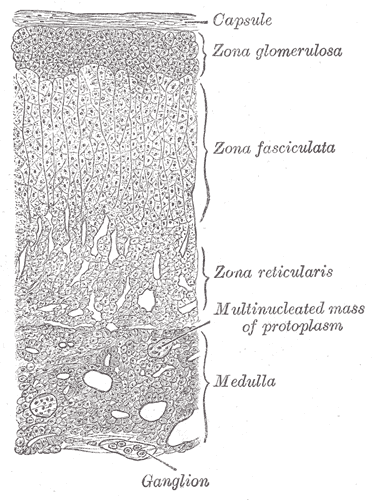 | ||
| Layers of cortex. | ||
| Latin | ' | |
| Gray's | subject #277 1278 | |
| System | ||
| MeSH | [1] | |
| [[Image:|190px|center|]] | ||
Cells of the zona fasciculataare part of the adrenal cortex and sit directly beneath the zona glomerulosa and are organized in bundles (or fascicles).
The zona chiefly produces glucocorticoids (eg, cortisol).
.JPG)
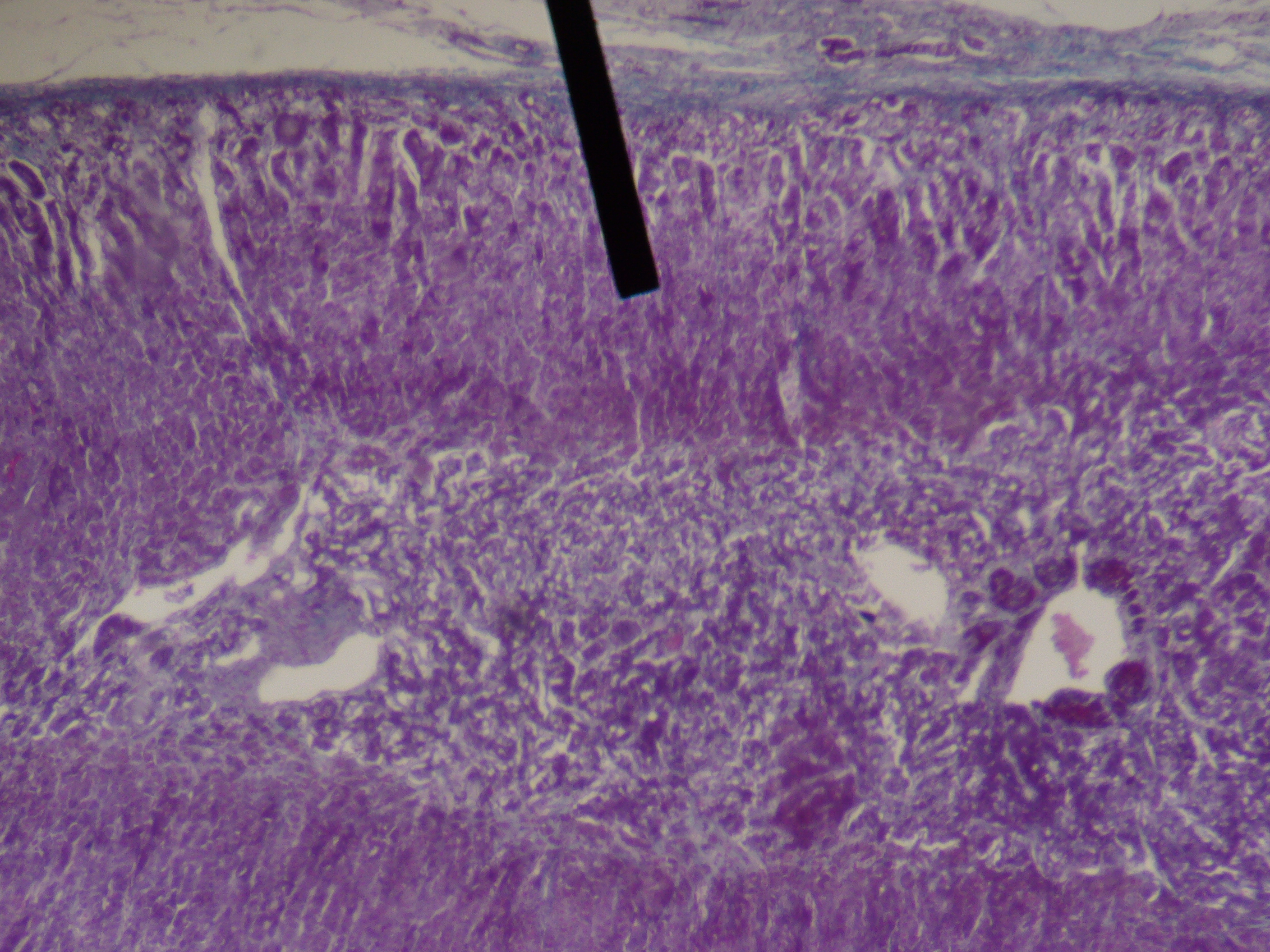
adrenal gland (zona fasciculata layer).
In addition to glucocorticoid production, the fasciculata is a secondary source of androgens such as testosterone, dihydrotestosterone (DHT), androstenedione, and dehydroepiandrosterone (DHEA). These enhance muscle mass, stimulate cell growth, and aid in the development of the secondary sex characteristics.
External links[]
- Histology at Boston University 14502loa
- Anatomy Atlases - Microscopic Anatomy, plate 15.292 - "Adrenal Gland"
Medulla: Chromaffin cells
Cortex: Zona glomerulosa • Zona fasciculata • Zona reticularis